Project Team Takes Part in the Interdisciplinary Trans-Nordic Conference on European Differentiated Integration

Row of flagpoles with European Union and Ukraine flags fluttering by wind on blue sky background

On 1-2 June 2022, “Lowering the Bar” Project Leader Dr. Anne Pintsch and Post-Doc Dr. Maryna Rabinovych participated in the Interdisciplinary Trans-Nordic Conference on European Differentiated Integration at the University of Agder (UiA). Conducted under the auspices of the Jean Monnet Centre of Excellence “Laboratories of Differentiated Integration in the post-Brexit Europe” at the UiA, the conference brought together scholars working on European integration across the Nordic countries from various disciplinary perspectives as well as practitioners. Given Russia’s ongoing  war against Ukraine, the EU’s efforts to redefine its future relations with Eastern Neighbours were actively debated by conference participants.

In terms of the conference, Dr. Anne Pintsch and Dr. Maryna Rabinovych presented two draft co-authored papers, tentatively titled “From the 2014 Annexation of Crimea to the 2022 Russia-Ukraine War: Association, Resilience and Socialization in the EU-Ukraine Relations between the Critical Junctures” and “Sustainable Development: A Common Denominator for the EU’s Policy towards the Eastern Partnership?”. The Power point presentations are available below.

In addition to the paper presentations, project leader Anne Pintsch chaired an Ambassadors’ Panel on “The War in Ukraine and European Integration – An Eastern Perspective”. The panel participants included Cristian Bădescu, Ambassador of Romania to Norway; Wolfgang Behrendt, Deputy Head of the European Union Delegation to Norway; Eszter Sándorfi, Ambassador of Hungary to Norway and Iwona Woicka-Żuławska, Ambassador of Poland to Norway.
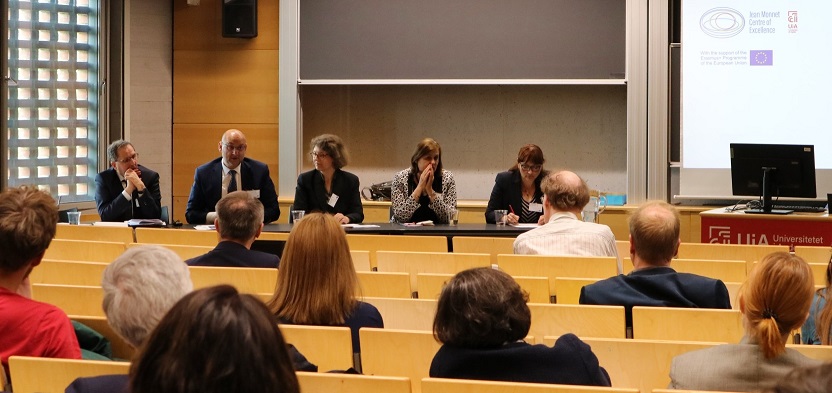
Ambassadors Panel, 1 June 2022: The war in Ukraine and European integration – An Eastern perspective
Participants from left to right:
Wolfgang Behrendt, Deputy Head of the European Union Delegation to Norway
Cristian Bădescu, Ambassador of Romania to Norway
Anne Pintsch, Leader of the “Lowering the Bar?”-project
Eszter Sándorfi, Ambassador of Hungary to Norway
Iwona Woicka-Żuławska, Ambassador of Poland to Norway


Project Post-Doc Maryna Rabinovych Presenting at the Peder Sather Workshop on Crises in the EU

University of Berkeley

On 26-27 May 2022, “Lowering the Bar” project Post-Doc Dr. Maryna Rabinovych took part at the Peder Sather workshop “Governing Crisis in the European Union” at University of California, Berkeley. Titled “EU Response to Russia’s War Against Ukraine: A Research Agenda”, her presentation took stock of the consequences of Russia’s war against Ukraine for the EU and EU-Ukraine relations and presented a research agenda on the EU’s response to war. This research agenda includes, inter alia, new dynamics in the EU’s relations with all associated Eastern Neighbours (Ukraine, Moldova and Georgia), organizational theory perspectives on the EU’s war response, discussion as to the future of the European Neighbourhood Policy and Eastern Partnership, and the war’s implications for intra-EU policies.

Focusing on one or several of these aspects of the research agenda, we will continue working on the chapter for the new edited volume on governing crises in the EU.

Project Post-Doc Maryna Rabinovych speaks at the 2022 European Studies Association Conference in Miami

Source: EUSA

On 19-22 May 2022, project post-doc Maryna Rabinovych took part at the 2022 EUSA 17th Biennial Conference in Miami. The European Studies Association is one of the world leading scholarly and professional associations, focusing on the intra-EU integration and EU external relations. This year, Russia’s war against Ukraine and EU’s response to war have been among the key topics of the Conference.

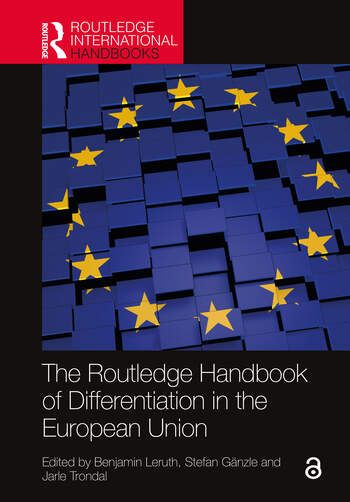
At EUSA, Maryna presented a draft paper, co-authored with project leader Anne Pintsch, with a tentative title “From the 2014 Annexation of Crimea to the 2022 Russia-Ukraine War: Association, Resilience and Socialization in the EU-Ukraine Relations between the Critical Junctures“. She also took part in the hybrid launch of the Routledge Handbook of Differentiation in the European Union, co-edited by B. Leruth, S. Gänzle and J. Trondal. Maryna’s and Anne’s contribution to the Handbook focuses on compliance in EU external differentiated integration, e.g. the Schengen Area, the European Economic Area or association relations with Eastern Neighbours. Last but not least, at EUSA Maryna was part of a Special Roundtable on “Russia’s War against Ukraine and Ukraine’s Challenge to Europe” together with Milada Vachudova (University of North Carolina), Stephanie Hofmann (European University Institute), Karolina Pomorska (Leiden University) and Juliet Johnson (McGill University). The Roundtable covered multiple interrelated topics, such as the reasons for and nature of the war, the dynamics of EU-Ukraine relations at the wartime, the effectiveness of EU sanctions against Russia and the war’s implications for global security.

“Lowering the Bar” Project Team publishes a book chapter about differentiated integration and compliance

Source: Routledge

Dr. Anne Pintsch and Dr. Maryna Rabinovych published a book chapter “EU External Differentiated Integration and Compliance: Theoretical and Legal Aspects” with the Routledge Handbook of Differentiation in the European Union, edited by Benjamin Leruth, Stefan Gänzle and Jarle Trondal.

While the volume seeks to offer a nuanced picture of differentiation in the European Union, the book chapter by the Project Team explores compliance in light of external EU differentiation. This phenomenon includes, for instance, the Schengen Area, EU sectoral agreements with Switzerland, the EU-UK Trade and Cooperation Agreement and the EU Association Agreements with Eastern Neighbours. As a first step, the chapter introduces theoretical expectations about compliance in the abovementioned cases, referring to the external enforcement, management, domestic pressure and legitimacy approaches. Next, it provides a nuanced overview of legal tools these agreements use to enforce compliance and discusses their relevance in light of compliance theories. It is concluded that fostering compliance under differentiated integration would require strengthening stakeholder engagement and structures for multistakeholder engagement.

Ukraine-EU Association Relations – Fostering Resilience against the Security Threat

Source: Colourbox

News about Russia’s possible invasion of Ukraine and its provocations in the Donbas region have been hitting the headlines of world top newspapers since autumn 2021. What is the role of the EU in the current crisis? How has the EU-Ukraine Association Agreement helped improve Ukraine’s resilience amid hybrid and immediate military threats? And why is the 2022 crisis so different from the one in 2014? Find answers to all these questions in the blog post by the “Lowering the Bar” project’s Post-Doc Maryna Rabinovych, published with the EUROPP blog at the London School of Economics.

“Lowering the Bar” Project Team publishes a book chapter on EU differentiated integration

Source: Routledge

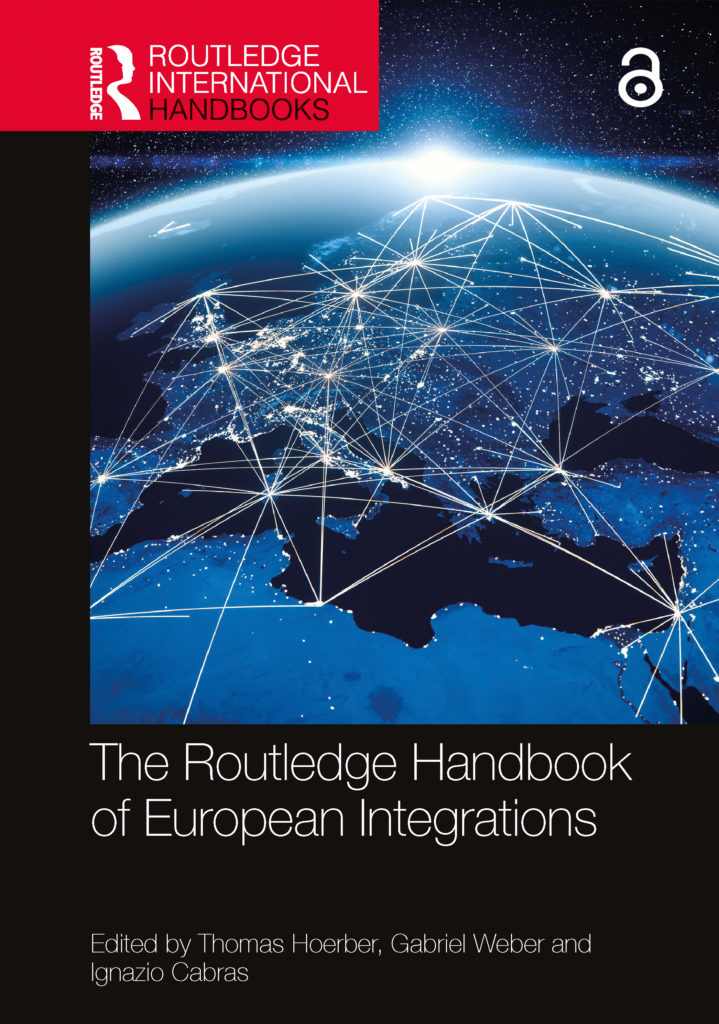
Dr. Maryna Rabinovych and Dr. Anne Pintsch worked together towards a book chapter “EU Differentiated Integration as a Tangible: Internal and External Dimensions” published with the Routledge Handbook of European Integrations, edited by Thomas Hoerber, Gabriel Weber and Ignazio Cabras. The Handbook offers a comprehensive coverage of various aspects of European integration, including the ones “usually neglected or excluded in European integration collections”. Such aspects relate to, for instance, football, tourism, Erasmus, as well as artificial intelligence, transport and energy. Moreover, the Handbook is marked by an insight into tangible benefits European integration has brought about, and this is where the Project Team’s chapter on differentiated integration comes into play.

The contribution explains tangible benefits, intangibles and challenges associated with a broad range of differentiated integration structures both within the EU itself (e.g., enhanced cooperation between Member States) and the ones also involving third states, such as Eastern Neighbours. It is demonstrated that the Association Agreements with Eastern Neighbours create valuable tangibles for the EU in terms of trade liberalization, sectoral cooperation and political dialogue. Strong association relations with third countries also help the Union to increase its visibility and reach in numerous policy domains, such as development and conflict management. Nevertheless, Member States’ divergent geopolitical interests and EU foreign policy’s contestation represent crucial challenges to the further advancement of the EU-Neighbours relations. Differentiation, nevertheless, remains a crucial aspect of European integration, requiring careful management and nuanced research for it to continue producing tangibles, rather than mushrooming challenges. 

“Lowering the Bar” project Post-Doc Maryna Rabinovych contributes to the Report on Russia’s “passportization” in Donbas

Source: Colourbox

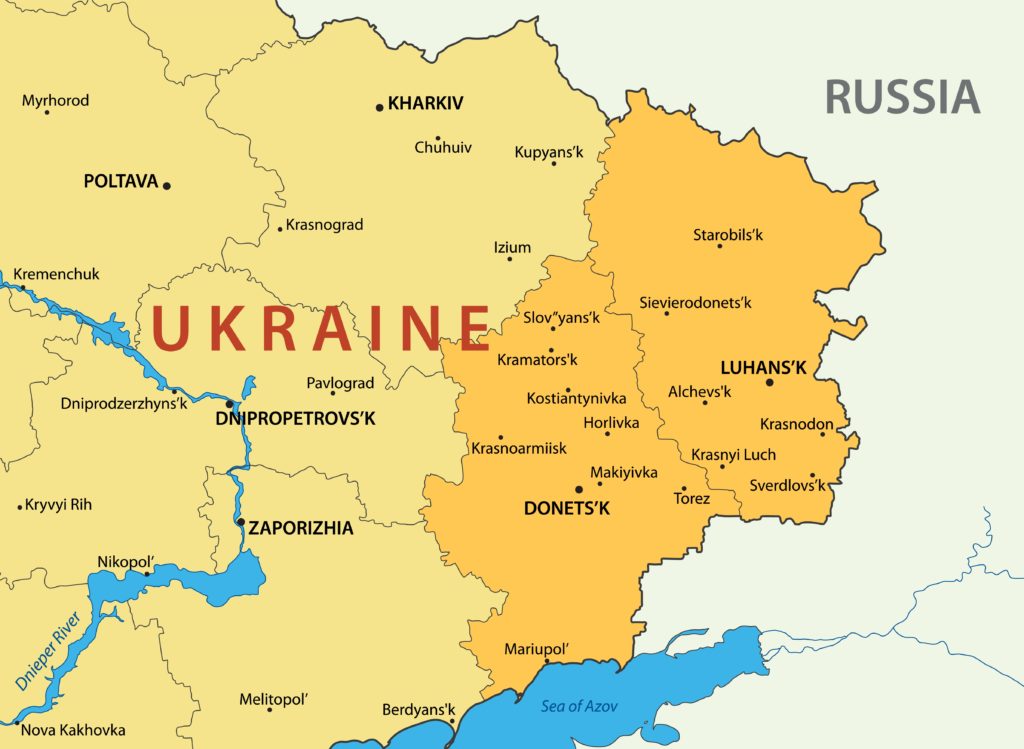
The Report, published in terms of the Temerty Contemporary Ukraine program at the Ukrainian Research Institute at Harvard University, presents novel data on Russia’s “passportization” and the voting by the residents of the the so-called “Donetsk People’s Republic” and “Luhansk People’s Republic.” These data provides a nuanced insight into the political preferences of the self-proclaimed “People’s Republics’ ” residents and the role the engagement of the Donbas residents into voting has played for the Duma elections. Moreover, amidst Russia’s current military build-up close to Ukrainian borders, the Report illustrates how “passportization” paves the way for the combination of the conventional and hybrid aggression vis-à-vis Ukraine. It offers several policy recommendations for the Ukrainian government and the international community to address “passportization” as a form of hybrid aggression.

For the detailed summary of the Report, please visit the webpage of the Ukrainian Research Institute at Harvard University.

“Lowering the Bar” project’s Post-Doc Maryna Rabinovych Presents her Paper on Compliance at the PLURICOURTS Research Conference on Compliance Mechanisms

Source: Colourbox

her paper titled Compliance Mechanisms in the EU “Development and “Integration without Membership” Association Agreements: A Quest for Commitment and Ownership at the PLURICOURTS Research Conference on Compliance Mechanisms at the University of Oslo’s Centre for the Study of the Legitimate Roles of the Judiciary in the Global Order. The key objective behind her paper is to explore why the EU may prefer to use informal mechanisms, rather than formal ones when addressing the instances of partners’ non-compliance with their obligations under Association Agreements with Ukraine, Moldova and Georgia (integration without membership context), and Latin America and the Caribbean (development cooperation context). It is shown that in both contexts, the EU’s preference forto informal mechanisms is primarily driven by its aspiration to promote partner countries’ commitment to and ownership of AAs through cooperation and assistance, rather than make them comply through formal mechanisms, such as dispute resolution or various forms of sanctions. It is, however, emphasized that if the non-compliance matter severely violates the EU’s or Member States’ interests, the EU may prefer to use a formal compliance mechanism. To ask for a draft paper, please contact Dr. Maryna Rabinovych, maryna.rabinovych@uia.no.  

More information about the conference can be found under this link.